
Learning how to choose a singing bowl can feel overwhelming — sizes range from palm-sized travel bowls to large therapeutic bowls, and every seller seems to have a different opinion on which one is “best”. This guide breaks it down simply: size, sound, material, and purpose, so you can pick a bowl that actually fits your practice instead of guessing.
At Himalayan Craft House, every bowl is hand-hammered by artisans in Nepal, so we’ve put together this guide from both craft knowledge and what actual buyers ask us most often.

Table of Contents
Step 1: Decide What You’re Using It For
Before looking at size or price, ask yourself why you want a singing bowl:
- Daily personal meditation → a small to medium bowl is easiest to handle
- Sound healing sessions or client work → a medium to large bowl with strong sustain
- Chakra balancing practice → a matched set tuned across different tones
- A gift → a smaller, decorative bowl that’s easy to unwrap and play immediately
- Home decor with meaning → a larger, visually striking bowl as a centerpiece
This single decision narrows down almost everything else.
Step 2: Understand Singing Bowl Sizes
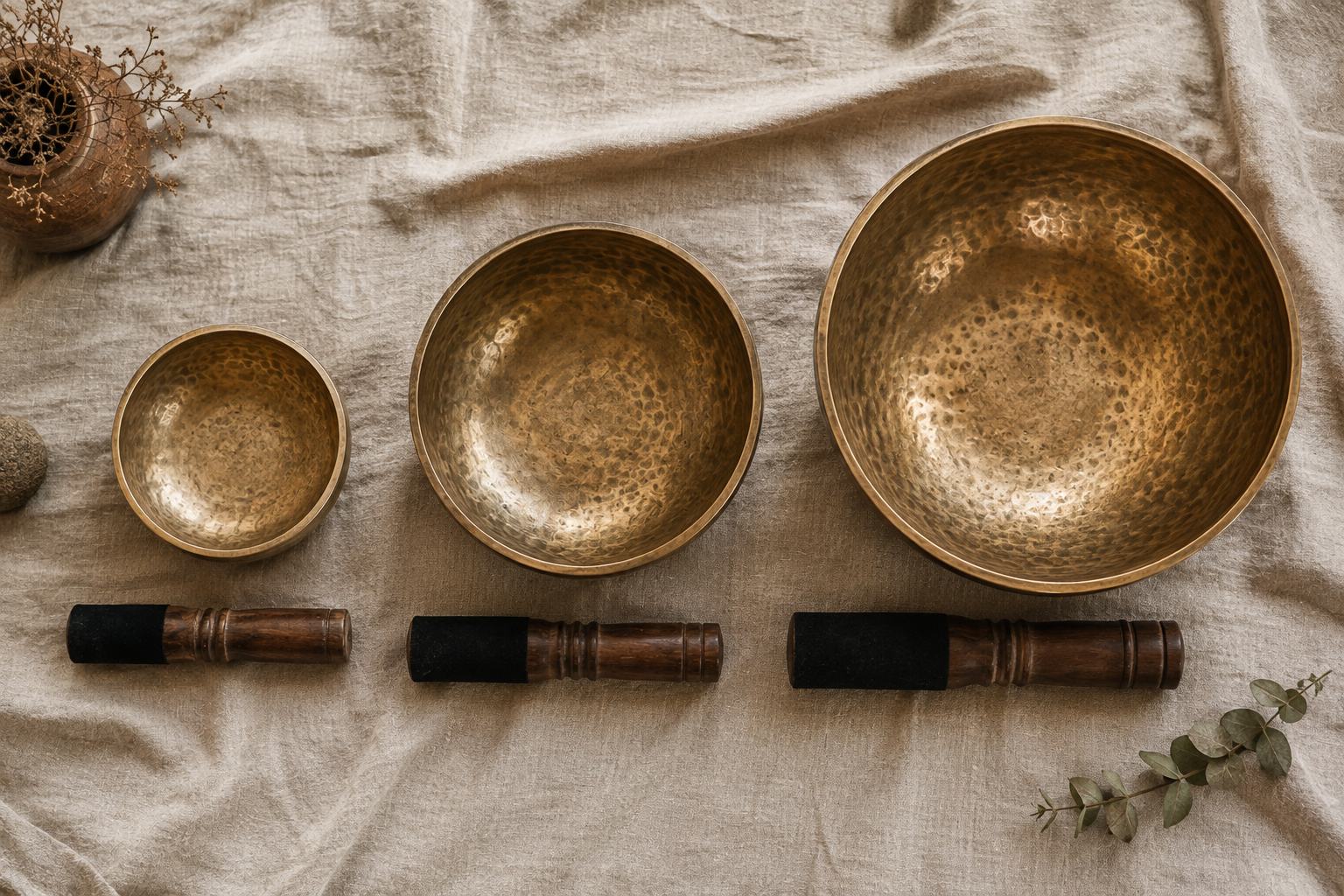
Size is the biggest factor in how a singing bowl sounds and feels to use. Here’s a simple breakdown:
| Size | Approx. Diameter | Tone | Best For |
|---|---|---|---|
| Small | 4–7 inches | Higher-pitched, shorter sustain | Travel, altars, quick resets, gifting |
| Medium | 8–12 inches | Balanced low, mid, and high harmonics | Most beginners, daily meditation |
| Large | 12+ inches | Deep, powerful, longer sustain | Sound therapy, group sessions, bodywork |
<cite index=”12-1″>Medium bowls between 8 and 12 inches are often recommended as a starting point because they deliver a good balance of low, mid, and high tones</cite>, and <cite index=”12-1″>at around 8–9 inches, they’re still light enough to hold comfortably in one palm</cite>. If you’re buying your very first singing bowl and aren’t sure where to start, this is the safest range.
Step 3: Listen Before You Decide (When Possible)
<cite index=”13-1″>Every well-made metal bowl produces several tones at once — a low fundamental, a mid-range hum, and shimmering high harmonics — and the most reliable way to choose is by how the sound actually feels to you</cite> rather than relying purely on a size chart. If you’re shopping online, look for a seller who provides a sound sample or video of the exact bowl, not a stock photo.
Step 4: Consider the Material
Most traditional Himalayan and Tibetan singing bowls are made from a hand-hammered bronze alloy. <cite index=”15-1″> andmade bronze bowls — particularly bell-metal bronze made from a copper-tin alloy — are widely regarded as producing the most resonant, best-sounding tone</cite>, compared to cheaper cast brass alternatives that can’t hold up to the same hand-hammering process. This is why hand-hammered construction (not a factory stamp) is one of the clearest signs of an authentic singing bowl.
Step 5: Match the Bowl to Your Experience Level
If you’re completely new to singing bowls:
- Start with a medium-size bowl (8–10 inches) for a forgiving, balanced tone
- Choose a bowl with a longer sustain, so mistakes in technique are less noticeable
- Practise striking before attempting to “rim” the bowl for a continuous tone
- Once comfortable, consider adding a smaller or larger bowl to build a small collection
Singing Bowl Sets vs. Single Bowls
A single bowl is a great entry point, but many practitioners eventually move toward a set. A chakra singing bowl set of 7 gives you a full range of tones in one purchase — useful for chakra-focused practice, sound baths, or simply having variety without buying bowls one at a time. If you only want one bowl to start, our Mini Singing Bowl or Full Moon Singing Bowl are both beginner-friendly choices.
Questions to Ask Before You Buy
- Is the bowl hand-hammered or machine-pressed?
- Where was it made, and by whom?
- Does the seller provide a sound sample of the actual item?
- What’s the return policy if the tone or size doesn’t suit you?
At Himalayan Craft House, every bowl is hand-hammered in the Kathmandu Valley and Patan, and every order is backed by a 14-day full refund — so you can choose confidently even when buying online.
Shop Handmade Singing Bowls from Nepal
Ready to choose a singing bowl that fits your practice? Browse our full meditation & sound healing collection, or read our Tibetan singing bowl guide to learn more about their history and benefits before you buy.
Still unsure which size or tone is right for you? Contact us and we’ll help you choose based on your practice and budget.