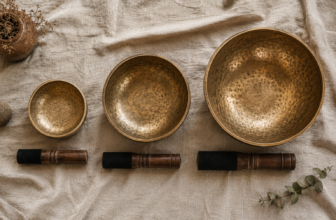

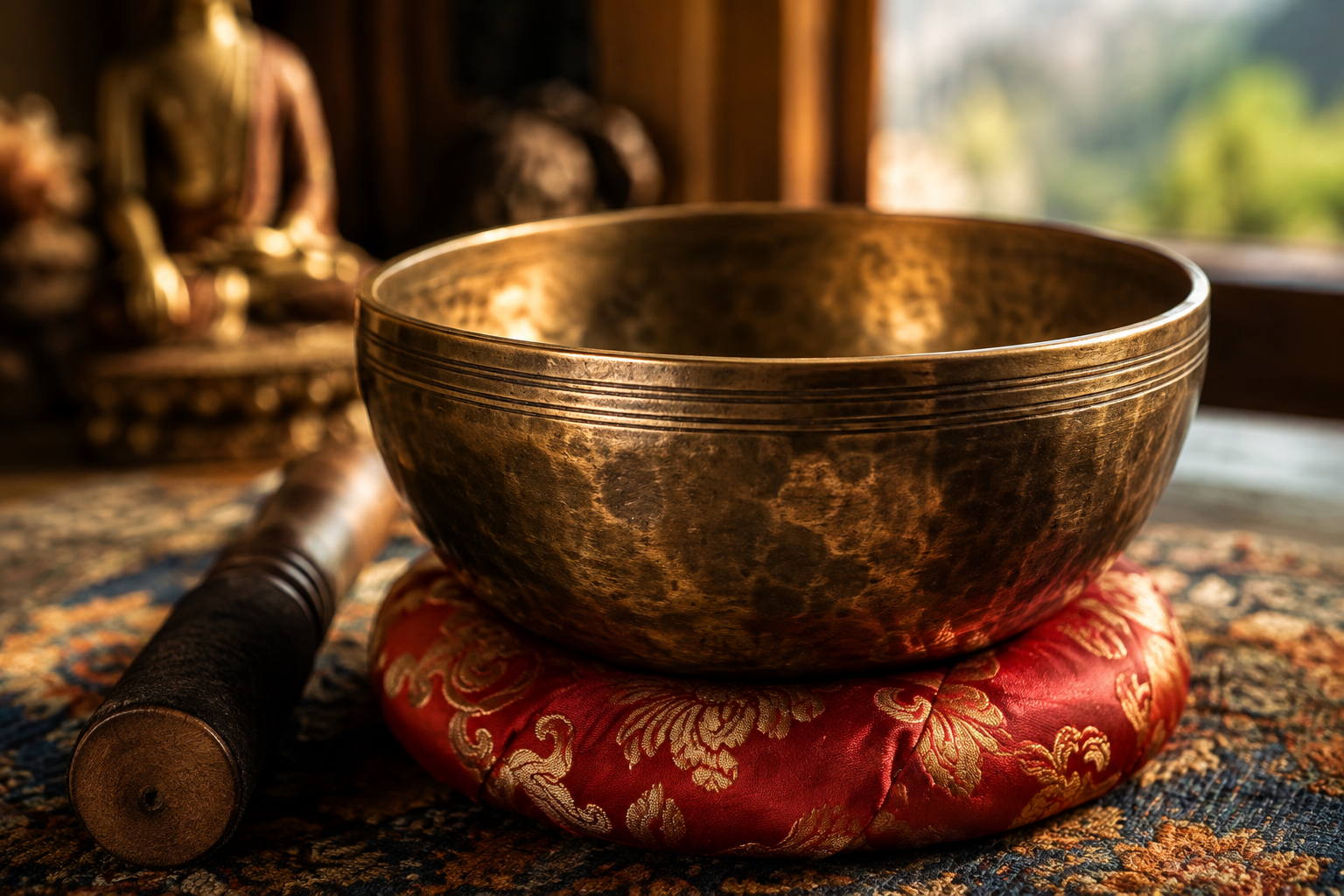
A Tibetan singing bowl is one of the most recognisable sound-healing tools in the world — a hand-hammered metal bowl that “sings” a deep, resonant tone when struck or rubbed with a wooden mallet. Whether you’re a meditation beginner, a yoga teacher, or simply searching for a meaningful gift, this guide walks you through what a Tibetan singing bowl actually is, where it comes from, how it’s used, and what to look for before you buy one.
At Himalayan Craft House, every bowl we sell is hand-hammered by artisans in the Kathmandu Valley and Patan, Nepal — so before you shop, here’s everything worth knowing.
Table of Contents
What Is a Tibetan Singing Bowl?
A Tibetan singing bowl is a type of standing bell — it rests rim-up on a cushion or the palm of your hand and produces a sustained musical tone when its rim is struck or circled with a mallet. Traditionally made from a metal alloy (often referred to as “seven-metal” bronze, though modern bowls vary in composition), each bowl has its own pitch, depending on its size, thickness, and shape.
Despite the name, historians note that the story is more nuanced than it seems. Metal bowls belong to a long Himalayan and East Asian metalworking tradition, and their role as sound-healing instruments is largely a twentieth-century development rather than an unbroken ancient practice. Most historians point to Nepal and Northern India as the true origin of these bowls before the tradition spread to Tibet and beyond, which is exactly why Himalayan Craft House sources directly from artisan communities in Nepal, where this craft is still practised today.
The History Behind the Tibetan Singing Bowl
Many Tibetan singing bowls were historically made in Nepal, alongside other handcrafted goods produced across the region for centuries. Older bowls were often used as everyday vessels — for eating, storing grain, or as ceremonial offering bowls in monasteries — before their sound-making qualities became central to how they’re used and marketed today. Modern interest in the bowls, along with their reputation for healing through vibration, grew significantly from the early 1990s onwards, as global curiosity about Himalayan culture increased.
Understanding this real history matters — it’s part of why buying an authentic, artisan-made Tibetan singing bowl (rather than a mass-produced import) actually supports the communities who keep the tradition alive.
7 Reported Benefits of a Tibetan Singing Bowl
It’s worth being upfront: rigorous clinical research on singing bowls is still limited, and most reported benefits are based on user experience and small-scale studies rather than large medical trials. That said, here are the most commonly reported benefits from regular practice:
1. Deep Relaxation
The subjective experience of deep relaxation is one of the most commonly reported benefits of listening to or playing a singing bowl.
2. Stress and Anxiety Support
Sound healing practitioners often use singing bowls to help alleviate stress and induce a sense of calm alongside other relaxation techniques.
3. Better Meditation Focus
The sustained tone gives your mind an “anchor” — many people use a Tibetan singing bowl to mark the start and end of a meditation session or to gently refocus attention when the mind wanders.
4. Improved Sleep Wind-Down Routines
Some users incorporate a few minutes of bowl sound into an evening routine to signal to the body it’s time to slow down — similar to how calming music or white noise is used.
5. Yoga and Savasana Enhancement
Yoga studios often incorporate singing bowl sounds during Savasana or closing meditation to deepen the relaxation response at the end of a class.
6. A Physical Meditation Ritual
Striking or rimming the bowl yourself turns meditation into a tactile, physical practice rather than a purely mental one – helpful for people who find silent meditation difficult.
7. A Mindful, Symbolic Gift
Beyond personal use, a Tibetan singing bowl is a popular gift for anyone going through a stressful period, starting a yoga practice, or setting up a calming home space.
How to Choose the Right Tibetan Singing Bowl
- Size and tone: Larger bowls (20cm+) produce deeper, lower tones, well-suited to meditation and sound therapy. Smaller bowls (under 15cm) produce higher tones and are easier to travel with or gift.
- Craftsmanship: Look for hand-hammered detail — subtle irregularities in shape and surface are a sign of authentic artisan work, not machine pressing.
- Sound test: A well-made bowl should produce a clear, sustained tone rather than a dull thud when struck.
- Purpose: Buying for daily meditation? Choose a mid-size bowl (14–18cm). Buying for a full chakra sound-healing practice? Consider a matched singing bowl set of 7 chakras instead of a single bowl.
How to Play a Tibetan Singing Bowl
- Place the bowl on an open palm, a cushion, or a flat, stable surface.
- Hold the mallet loosely and strike the outer rim gently for a clear starting tone.
- To sustain the sound, press the mallet against the rim and circle it slowly and evenly.
- Keep consistent pressure and speed — the tone builds gradually, so patience matters more than force.
Caring for Your Singing Bowl
Wipe your bowl with a soft, dry cloth after use to prevent tarnishing. Avoid harsh chemical cleaners on hand-hammered bronze, and store it in a cushioned pouch or stand when not in use to protect the rim, which is the most important part for producing a clean tone.
Shop Authentic Tibetan Singing Bowls, Handmade in Nepal
Every Tibetan singing bowl at Himalayan Craft House is hand-hammered by skilled artisans in the Kathmandu Valley and Patan — no shortcuts, no mass production. Browse our full collection of handmade singing bowls, or explore our Chakra Singing Bowl Set of 7 for a complete sound healing practice.
Not sure which one is right for you? Contact us and our team will help you choose based on your practice, budget, and space.
Sources: Tricycle — Tibetan Singing Bowls: Where Did They Really Come From?; Healing Sounds — Tibetan Singing Bowls: Exploring Their Historical Roots; Raven Sounds — Singing Bowl Origin: The Real History Behind the Myths